


Joshua Davila recently hosted the founder of the Internet Archive, Brewster Kahle, on his podcast All Models are Wrong, where they discussed the open Internet and the monopolization of information, as well as civilizational infrastructure.

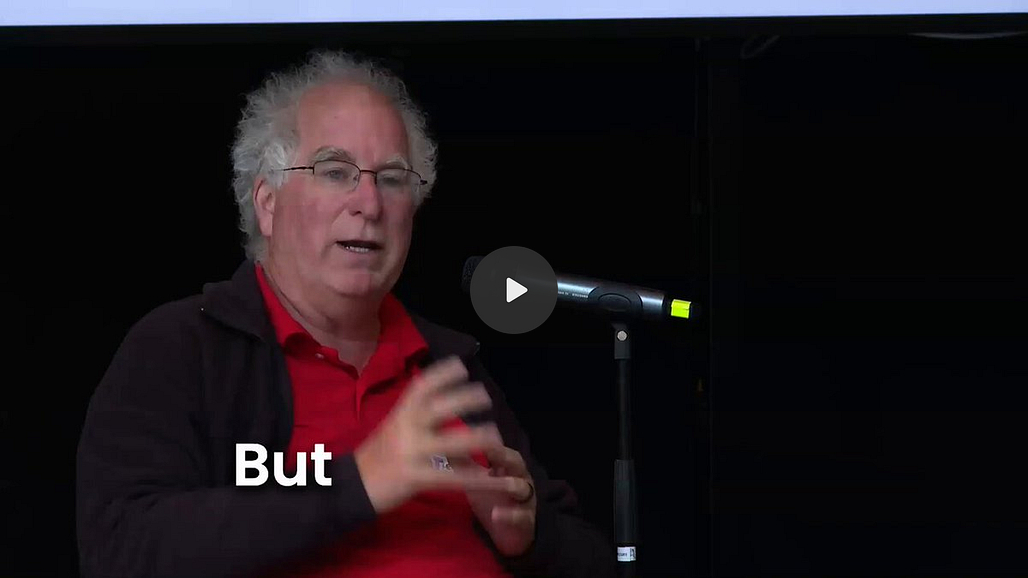
Kahle advocated for a world in which “everyone’s a publisher” and not just centralized actors that dictate information distribution, which, as Kahle put it, “work extremely well with authoritarian governments.” For Kahle, these “middlemen layers” prevent people from owning and being paid for their work, and what we really need is a decentralized system that fosters “independence and control” over one’s own work—a sentiment widely shared by Internet activists, and especially those in crypto. “That’s the only way to make a free and open society work; otherwise, we end up with a kind of Soviet, centralized… controlled system and economy.”
But, like many of us, Kahle recognizes that technology is as liberating as it is oppressive. He explained how “public good AI” could be a good thing for societal matters, such as healthcare, education, and the environment. Kahle supports developing more tech-sovereignty for local populations by training LLMs on local values and interests, rather than just outsourcing to the US or China, or training LLMs on the commercial interests of a few large corporations.
When asked about “civilizational infrastructure,” Kahle expressed his support for “the freedom to build non-profit infrastructure” that is separate from the “top-down nature of government institutions”—like the Internet Archive, for example. These institutions would be able to move outside of the constraints of government, but are still for the public good.
He also suggested that capitalism is “another piece of civilizational infrastructure that we need.” That is, “buying and selling things; like having large numbers of small, competitive players.” Licensing and regulation regimes and the lack of ownership in our society, he explained, is much more like feudalism than what Adam Smith envisioned. “The idea that we can go and have commerce happen— small-scale, competitive commerce—I think is a great thing to have happen.” And as he concluded, “on the Internet, let’s try buying and selling files, let’s not just do this license garbage. It’s the only way, I think, we are going to make a decentralized world prosper.”
Lastly, Davila asked Kahle about his work to build a new kind of credit union after the 2008 financial crisis called the Internet Archive Federal Credit Union. The credit union was a member-owned, non-profit bank that provided underserved communities. Unfortunately, the National Credit Union Administration—a federal agency—created a lot of conflict and the members voted to liquidate it. As Kahle put it, it was “a diseased area that was controlled too much.”
Throughout the talk, Kahle pointed out something that, from my perspective, has placed power in the hands of the few and at the price of the people: big government. His solution was more explicit: capitalism fostered through “small-scale, competitive commerce.” But this solution can only be fostered where the government cannot pick winners and losers.
In the fallout of the 2008 financial crisis, as he pointed out, the US government bailed out the major banks that were engaging in risky investments while everyday Americans largely absorbed the costs. He saw many issues with the financial crisis and its aftermath, which led him to develop his credit union for the public good, but ultimately failed when the federal government stopped it, likely to protect banks’ interests—as Kahle suggested. Many may immediately diagnose the disease as capitalism—and I’m not here to say there aren’t costs to capitalism—but the common denominator in each of the issues he raised was ultimately government.
Capitalism can, of course, generate a concentration of goods and services, but the government ultimately determines whether that concentration becomes a protected, durable monopoly. His credit union presented a perfect case-study: large players leveraged the government to do their bidding, and it’s because they could. The government paved the perfect avenue for doing so.
Take the concern with AI and its monopolization of information as another example. Frontier models are only likely to succeed at controlling information-distribution if the government steps in to cement high barriers of entry for competitors. And the government is certainly incentivized to do so because concentration of information fosters more control. Open-models are our best option at combatting centralization and protecting our freedom, but they can only prosper where developers are not in constant fear of government prosecution. Some have argued that even open-models will need their training subsidized by the government to cover massive costs, risking “AI communism,” but as we’ve said before:
“Software companies have found countless ways to fund expensive upstream technologies by capturing value elsewhere. If the market prefers workplace automation…, specialized applications, hosting, integration, or hardware to expensive metered tokens, then capital will follow. That is not a failure of capitalism. That is capitalism on open source steroids.”
On the related matter of ownership on the Internet, Bitcoin presented a solution to the problem in 2008 and since 2009 has effectively illustrated what property rights look like in the Digital Age: cryptographically secured ownership on an immutable data structure computationally maintained by a decentralized network. A mouthful, but that’s because it’s a sophisticated technology that protects against the very problems of the traditional financial system and, well, government. But, like with open AI models, even those continuously maintaining the software necessary to operate and participate in the Bitcoin network need protection from adversarial governments:
“Open-source software has long empowered anyone in the world with the tools and knowledge necessary for self-sovereignty since the advent of the personal computer and the Internet as we know it. Anyone can access these tools, and often do as means for liberation and prosperity. Governments and corporations alike cannot stop open-source software itself from spreading, because like all other information, once it is made publicly-available, it can never be taken back. It goes from hand to hand, device to device; it is published on numerous websites and books. It longs to exist and spread.
This, however, does not make open-source software completely immune from censorship. While it itself is largely censorship-resistant, the publishers are not, and stopping open-source development only requires prosecuting those who develop it.”
Thus, we cannot let the government or corporations prevent us from having freedom, knowledge, and prosperity. And the best way to do so is by eliminating the means for anyone to play God; to pick winners and losers; to discriminate and oppress. If we allow the government to engineer social, political, and economic predetermined outcomes then we’ll be led like sheep straight into tyranny. -Laz
What else we’re reading
From the internet to the streets: Resisting the violation of digital rights as a means of crushing protests in India - Association for Progressive Communications
ICE Has Been Dumping Protester Photos Into a Palantir Supported Database - Wired
The Authoritarian Future Is Already Here - A look at how an even deeper level of tech-authoritarianism that we’ve yet to see in America is being exported to countries like Uganda from China and Russia, and how it gives us a glimpse of what could happen here. - New York Times
Every Country Has Its Own Internet Now - Politico


If you found this interesting, please share it. Your support helps us grow.